
News
By Yvonne Chitambira
The Consumer Protection Commission (CPC) has issued a stern warning to transport operators and their agents across Zimbabwe against forcing commuters onto buses through intimidation, coercion or physical force, saying the practice is illegal and punishable under the Consumer Protection Act.
In a public notice released this week, the Commission said it has observed an increase in incidents where transport operators and their proxies are allegedly pulling, pushing and misleading passengers into boarding buses they do not intend to use, particularly as schools close and travel demand rises.
The CPC said the conduct infringes on the rights of consumers and violates the provisions of the Consumer Protection Act [Chapter 14:44], which protects consumers from unfair, misleading and coercive business practices.
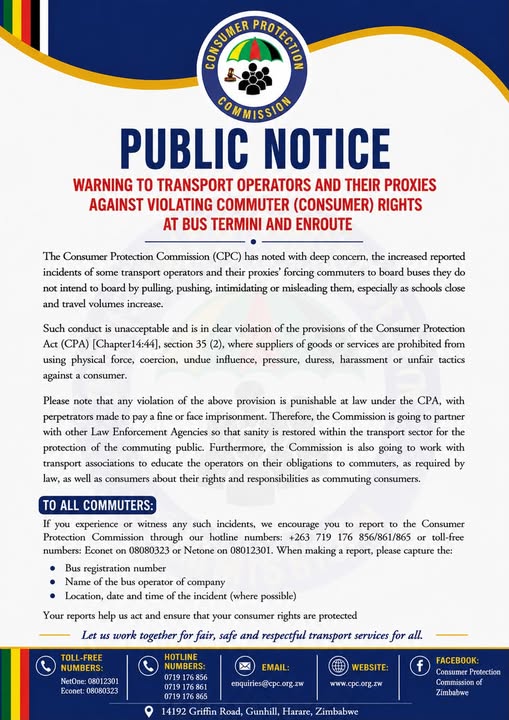
"The Consumer Protection Commission (CPC) has noted with deep concern the increased reported incidents of some transport operators and their proxies forcing commuters to board buses they do not intend to board by pulling, pushing, intimidating or misleading them, especially as schools close and travel volumes increase," the Commission said.
The Commission cited Section 35(2)of the Consumer Protection Act, which prohibits suppliers of goods and services from using physical force, coercion, undue influence, pressure, duress, harassment or any other unfair tactics against consumers.
"Such conduct is unacceptable and is in clear violation of the provisions of the Consumer Protection Act (CPA) [Chapter 14:44], section 35(2), where suppliers of goods or services are prohibited from using physical force, coercion, undue influence, pressure, duress, harassment or unfair tactics against a consumer," the notice reads.
The Commission warned that anyone found violating the law risks criminal penalties.
"Please note that any violation of the above provision is punishable at law under the CPA, with perpetrators made to pay a fine or face imprisonment."
To curb the growing problem, the CPC said it will strengthen collaboration with law enforcement agencies to restore order at bus termini and along public transport routes.
"Therefore, the Commission is going to partner with other law enforcement agencies so that sanity is restored within the transport sector for the protection of the commuting public."
In addition to enforcement measures, the Commission said it will engage transport associations to educate operators and their employees on their legal obligations while also raising awareness among commuters about their rights and responsibilities.
The warning comes at a time when thousands of Zimbabweans are expected to travel across the country following the closure of schools, a period that traditionally sees increased activity at bus termini and a rise in reports of touting and aggressive passenger solicitation.
The Consumer Protection Act guarantees consumers the right to make informed choices without intimidation or undue influence, requiring businesses to conduct their operations fairly and ethically.
The Commission urged members of the public who experience or witness such incidents to report them immediately.
According to the notice, complainants should provide as much information as possible, including:
* The registration number of the bus.
* The name of the bus operator or transport company.
* The location, date and time of the incident, where possible.
Reports can be submitted through the Consumer Protection Commission's hotline numbers or at its offices.
The Commission said public cooperation will play a critical role in protecting consumer rights and improving standards within Zimbabwe's public transport sector.
"Your reports help us act and ensure that your consumer rights are protected. Let us work together for fair, safe and respectful transport services for all."
The CPC reaffirmed its commitment to enforcing consumer protection laws and ensuring that all transport operators uphold the rights, dignity and safety of commuters throughout Zimbabwe.
In a public notice released this week, the Commission said it has observed an increase in incidents where transport operators and their proxies are allegedly pulling, pushing and misleading passengers into boarding buses they do not intend to use, particularly as schools close and travel demand rises.
The CPC said the conduct infringes on the rights of consumers and violates the provisions of the Consumer Protection Act [Chapter 14:44], which protects consumers from unfair, misleading and coercive business practices.
"The Consumer Protection Commission (CPC) has noted with deep concern the increased reported incidents of some transport operators and their proxies forcing commuters to board buses they do not intend to board by pulling, pushing, intimidating or misleading them, especially as schools close and travel volumes increase," the Commission said.
The Commission cited Section 35(2)of the Consumer Protection Act, which prohibits suppliers of goods and services from using physical force, coercion, undue influence, pressure, duress, harassment or any other unfair tactics against consumers.
"Such conduct is unacceptable and is in clear violation of the provisions of the Consumer Protection Act (CPA) [Chapter 14:44], section 35(2), where suppliers of goods or services are prohibited from using physical force, coercion, undue influence, pressure, duress, harassment or unfair tactics against a consumer," the notice reads.
The Commission warned that anyone found violating the law risks criminal penalties.
"Please note that any violation of the above provision is punishable at law under the CPA, with perpetrators made to pay a fine or face imprisonment."
To curb the growing problem, the CPC said it will strengthen collaboration with law enforcement agencies to restore order at bus termini and along public transport routes.
"Therefore, the Commission is going to partner with other law enforcement agencies so that sanity is restored within the transport sector for the protection of the commuting public."
In addition to enforcement measures, the Commission said it will engage transport associations to educate operators and their employees on their legal obligations while also raising awareness among commuters about their rights and responsibilities.
The warning comes at a time when thousands of Zimbabweans are expected to travel across the country following the closure of schools, a period that traditionally sees increased activity at bus termini and a rise in reports of touting and aggressive passenger solicitation.
The Consumer Protection Act guarantees consumers the right to make informed choices without intimidation or undue influence, requiring businesses to conduct their operations fairly and ethically.
The Commission urged members of the public who experience or witness such incidents to report them immediately.
According to the notice, complainants should provide as much information as possible, including:
* The registration number of the bus.
* The name of the bus operator or transport company.
* The location, date and time of the incident, where possible.
Reports can be submitted through the Consumer Protection Commission's hotline numbers or at its offices.
The Commission said public cooperation will play a critical role in protecting consumer rights and improving standards within Zimbabwe's public transport sector.
"Your reports help us act and ensure that your consumer rights are protected. Let us work together for fair, safe and respectful transport services for all."
The CPC reaffirmed its commitment to enforcing consumer protection laws and ensuring that all transport operators uphold the rights, dignity and safety of commuters throughout Zimbabwe.
Published
August 5, 2026 at 8:07 AM