
News
By Priscilla Mafa
Calls for a shift towards a people-centred approach to public debt management dominated discussions at the 8th Zimbabwe Annual Public Debt Conference, with stakeholders emphasising that debt management must prioritise citizens’ welfare, development and human dignity.
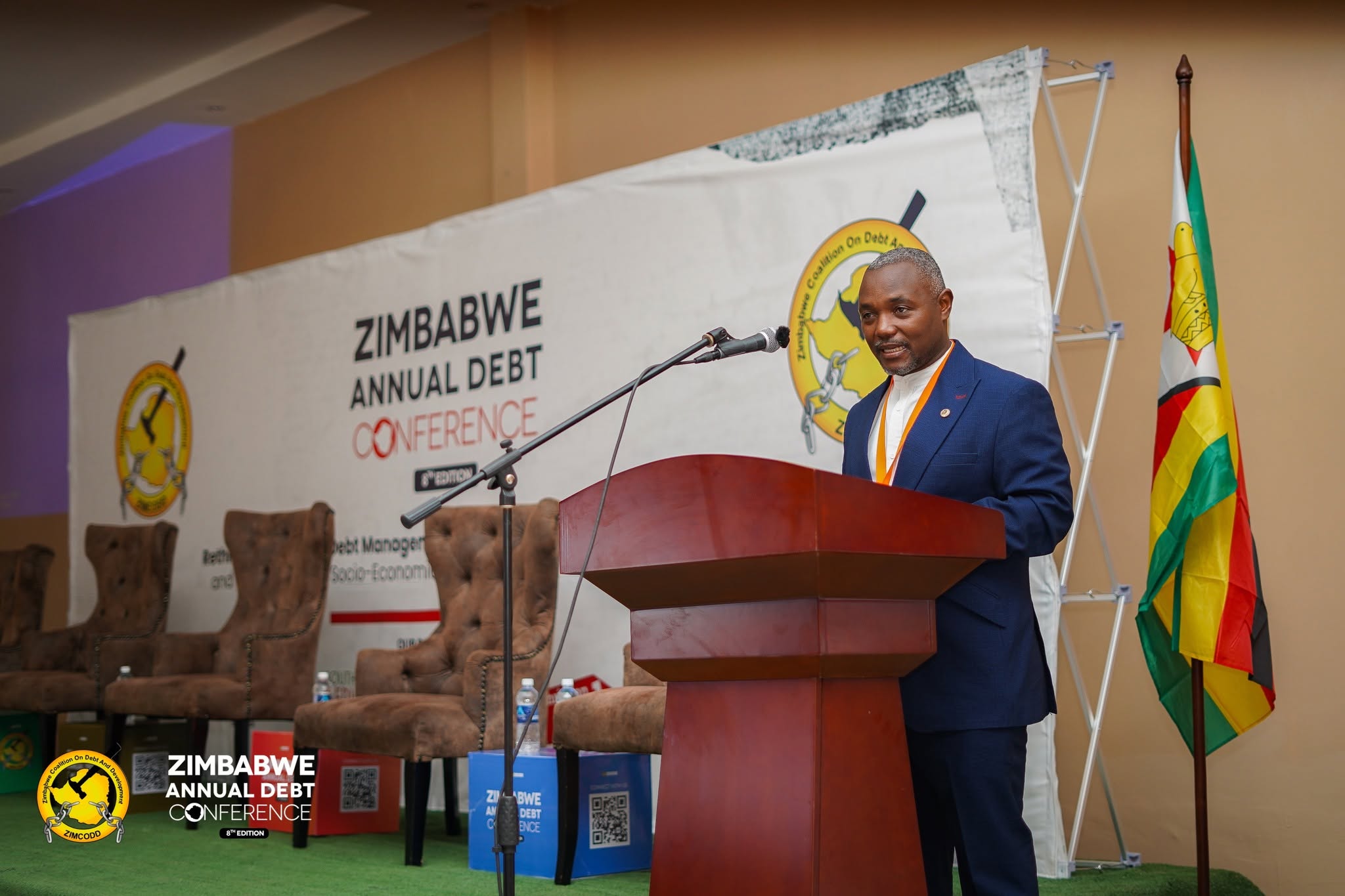
The conference, held under the theme “Rethinking Sovereign Debt Management in Zimbabwe: Justice, Sovereignty and People-Centred Socio-Economic Development in a Global Poly-crisis,” brought together government officials, Parliamentarians, development partners, academics, civil society organisations, labour representatives, private sector players and citizens to deliberate on Zimbabwe’s debt challenges and possible pathways towards sustainable solutions.
ZIMCODD Board Chairperson Rosewita Katsande, who officially opened the conference, called for a people-driven approach that advances justice, protects national sovereignty and promotes inclusive socio-economic development.
Board Chairperson Katsande said Zimbabwe’s debt situation requires urgent attention, including strengthening domestic resource mobilisation, protecting investment in public services and developing locally driven solutions that place citizens at the centre of economic decision-making.
“Public debt must be managed in a way that safeguards development gains and ensures that citizens are not left carrying the burden of economic challenges,” she said.
ZIMCODD Executive Director John P. Maketo challenged stakeholders to rethink the country’s approach to sovereign debt management, stressing that debt should not overshadow the needs and aspirations of ordinary citizens.
“Debt must never become more important than people,” Executive Director Maketo said, highlighting that public debt is not only an economic matter but also a question of governance, democracy, development and human rights.
He said debt decisions must be assessed through the impact they have on communities, particularly vulnerable groups who often bear the consequences through reduced access to essential services, limited economic opportunities and weakened social protection systems.
The conference heard that Zimbabwe’s public debt currently stands at approximately US$22.7 billion, comprising around US$12.5 billion owed to external creditors, US$10.1 billion in domestic debt and US$2.8 billion owed to multilateral institutions.
Representing the Office of the President and Cabinet, Mrs A. Tinarwo highlighted that the country’s debt burden continues to constrain fiscal space, affecting the government's ability to finance development priorities.
She noted that limited fiscal resources have implications on critical sectors requiring sustained public investment.
On debt resolution efforts, Mrs Martha Mugwenhi from the Ministry of Finance, Economic Development and Investment Promotion (MoFEDIP) said dialogue between government and creditors had evolved, creating a platform for collaborative solutions.
“We used to talk about each other's government and creditors but when the dialogue started, we are now talking to each other to come up with a roadmap for arrears clearance,” Mugwenhi said.
She said ongoing engagements were aimed at creating conditions for resolving Zimbabwe’s debt challenges and restoring pathways towards sustainable economic recovery.
Meanwhile, discussions at the conference also focused on the impact of debt pressures on local governance and service delivery.
Dr Vincent Chakunda presented on “Debt, Local Government Finance and Devolution in Zimbabwe: Fiscal Pressure, Constrained Transfers and the Search for Sustainable Municipal Finance,” examining how municipal debt, limited fiscal transfers and ageing infrastructure continue to affect local authorities’ capacity to provide essential services.
Dr Chakunda highlighted the need to strengthen public financial management systems, improve debt governance, protect infrastructure investment and ensure predictable devolution funding to support sustainable and resilient local governments.
The conference continues to provide a platform for multi-stakeholder dialogue on building a debt management framework that balances economic stability with social justice, development needs and the lived realities of Zimbabwean citizens.
The conference, held under the theme “Rethinking Sovereign Debt Management in Zimbabwe: Justice, Sovereignty and People-Centred Socio-Economic Development in a Global Poly-crisis,” brought together government officials, Parliamentarians, development partners, academics, civil society organisations, labour representatives, private sector players and citizens to deliberate on Zimbabwe’s debt challenges and possible pathways towards sustainable solutions.
ZIMCODD Board Chairperson Rosewita Katsande, who officially opened the conference, called for a people-driven approach that advances justice, protects national sovereignty and promotes inclusive socio-economic development.
Board Chairperson Katsande said Zimbabwe’s debt situation requires urgent attention, including strengthening domestic resource mobilisation, protecting investment in public services and developing locally driven solutions that place citizens at the centre of economic decision-making.
“Public debt must be managed in a way that safeguards development gains and ensures that citizens are not left carrying the burden of economic challenges,” she said.
ZIMCODD Executive Director John P. Maketo challenged stakeholders to rethink the country’s approach to sovereign debt management, stressing that debt should not overshadow the needs and aspirations of ordinary citizens.
“Debt must never become more important than people,” Executive Director Maketo said, highlighting that public debt is not only an economic matter but also a question of governance, democracy, development and human rights.
He said debt decisions must be assessed through the impact they have on communities, particularly vulnerable groups who often bear the consequences through reduced access to essential services, limited economic opportunities and weakened social protection systems.
The conference heard that Zimbabwe’s public debt currently stands at approximately US$22.7 billion, comprising around US$12.5 billion owed to external creditors, US$10.1 billion in domestic debt and US$2.8 billion owed to multilateral institutions.
Representing the Office of the President and Cabinet, Mrs A. Tinarwo highlighted that the country’s debt burden continues to constrain fiscal space, affecting the government's ability to finance development priorities.
She noted that limited fiscal resources have implications on critical sectors requiring sustained public investment.
On debt resolution efforts, Mrs Martha Mugwenhi from the Ministry of Finance, Economic Development and Investment Promotion (MoFEDIP) said dialogue between government and creditors had evolved, creating a platform for collaborative solutions.
“We used to talk about each other's government and creditors but when the dialogue started, we are now talking to each other to come up with a roadmap for arrears clearance,” Mugwenhi said.
She said ongoing engagements were aimed at creating conditions for resolving Zimbabwe’s debt challenges and restoring pathways towards sustainable economic recovery.
Meanwhile, discussions at the conference also focused on the impact of debt pressures on local governance and service delivery.
Dr Vincent Chakunda presented on “Debt, Local Government Finance and Devolution in Zimbabwe: Fiscal Pressure, Constrained Transfers and the Search for Sustainable Municipal Finance,” examining how municipal debt, limited fiscal transfers and ageing infrastructure continue to affect local authorities’ capacity to provide essential services.
Dr Chakunda highlighted the need to strengthen public financial management systems, improve debt governance, protect infrastructure investment and ensure predictable devolution funding to support sustainable and resilient local governments.
The conference continues to provide a platform for multi-stakeholder dialogue on building a debt management framework that balances economic stability with social justice, development needs and the lived realities of Zimbabwean citizens.
Published
July 17, 2026 at 8:00 AM